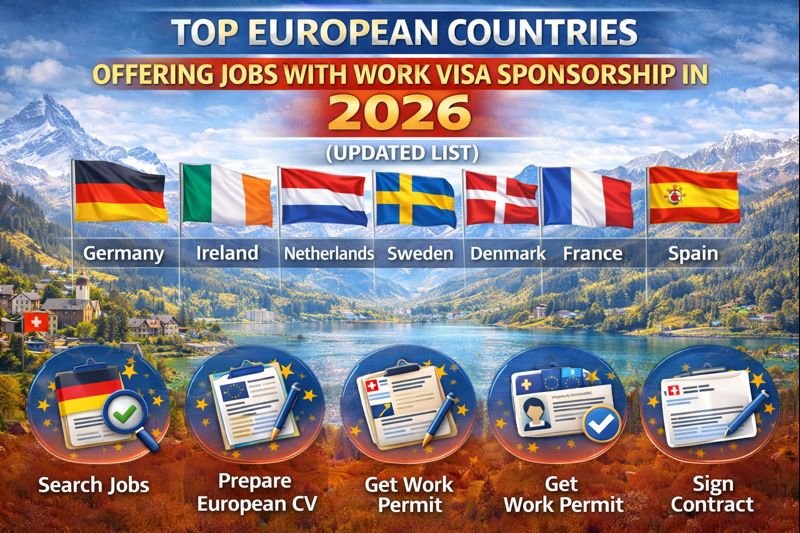
In Europe, “work visa sponsorship” usually means you first secure a job offer, then the employer supports your residence/work permit (sometimes with labour-market checks, sometimes with fast-track rules for skilled roles). In 2026, these countries stay among the best options because they have clear legal routes and active hiring in shortage sectors.
✅ Updated Top Countries (2026)
-
Germany
Germany is one of the strongest choices because of its expanded skilled immigration rules and wide demand in IT, engineering, healthcare, and trades. The government’s “Skilled Immigration Act” updates make it easier for qualified workers to enter and stay for work/qualification pathways. -
Ireland
Ireland’s Critical Skills Employment Permit is a major route for qualified professionals (tech, healthcare, engineering, finance). It’s designed to attract hard-to-find talent and can lead to longer-term residence options after the permit period. -
Netherlands
The Netherlands remains a top destination for highly educated migrants through routes like the European Blue Card, with updated official guidance from IND (Dutch immigration). -
Sweden
Sweden has a straightforward employer-led work permit system: you must have a signed contract, proper salary/conditions, and employer-provided insurances. It’s a strong option for tech, engineering, and skilled roles. -
Denmark
Denmark’s Positive List is updated regularly and specifically lists shortage occupations that qualify for residence/work permits—very helpful for targeting the right jobs in 2026. -
France
France offers the “Passeport Talent” routes for skilled employees and professionals, designed to improve economic attractiveness and allow multi-year residence (often up to four years depending on category). -
Spain
Spain provides pathways for highly qualified workers, requiring a work/residence permit (and visa where needed). This route is useful for executives, specialists, and skilled professionals with strong job offers.
Step-by-Step: How to Get a Sponsored Job in Europe (2026)
Step 1: Pick the best country for your profile
If you’re highly skilled, prioritize Germany/Netherlands/France/Ireland. If you match shortage lists, Denmark is excellent. If you want a clear employer process, Sweden is strong.
Step 2: Choose a shortage occupation (this matters most)
Employers sponsor faster when roles are hard to fill (IT, healthcare, engineering, trades). Denmark literally publishes eligible shortage roles via the Positive List.
Step 3: Create a Europe-standard CV + targeted cover letter
Keep it 1–2 pages, results-focused, and truthful. For tech/engineering, include projects and tools. For healthcare, include licensing/recognition status.
Step 4: Apply where sponsorship is common
Use:
-
Company career pages (best)
-
National job portals
-
Licensed recruitment agencies (optional)
Step 5: Confirm the employer will support the permit
Before interview ends, ask politely:
“Do you provide work permit sponsorship for non-EU candidates?”
Sweden’s system is clearly employer-tied with contract + conditions requirements.
Step 6: Employer starts the legal process (country-specific)
Examples:
-
Germany uses skilled immigration pathways and Blue Card routes for qualified jobs.
-
Denmark requires the job to match Positive List criteria.
-
France uses Talent Passport categories for qualified profiles.
Step 7: Apply for visa/residence permit with your job documents
You’ll typically submit: passport, contract/job offer, qualifications, experience proof, and forms required by that country.
Step 8: Avoid scams
Never pay for a “guaranteed job.” Use official government pages and real employer emails.